

Performance Max and Advantage+ explained for business owners
A plain-English guide to Google Performance Max and Meta Advantage+: how these AI ad campaigns work, what you still control, and how to avoid wasted spend.

Performance Max and Advantage+ are AI-driven ad campaign types from Google and Meta. You set a goal, budget and creative, and the platform decides where, when and to whom your ads appear. They can work well for small businesses, but only when you track the right conversions, supply strong creative and keep a close eye on lead quality.
This guide is for owners and managers who keep seeing these names in their ad accounts or in agency proposals and want to understand what they are agreeing to. No jargon beyond what you need to make good decisions.
What Performance Max is
Performance Max is a Google Ads campaign type that lets you reach people across Google's ad inventory, including Search, YouTube, Display, Discover, Gmail and Maps, from a single campaign. You provide headlines, descriptions, images, videos, your website and a conversion goal. Google's systems combine those assets and choose placements and bids. Google's own overview, About Performance Max campaigns, is the best starting point.
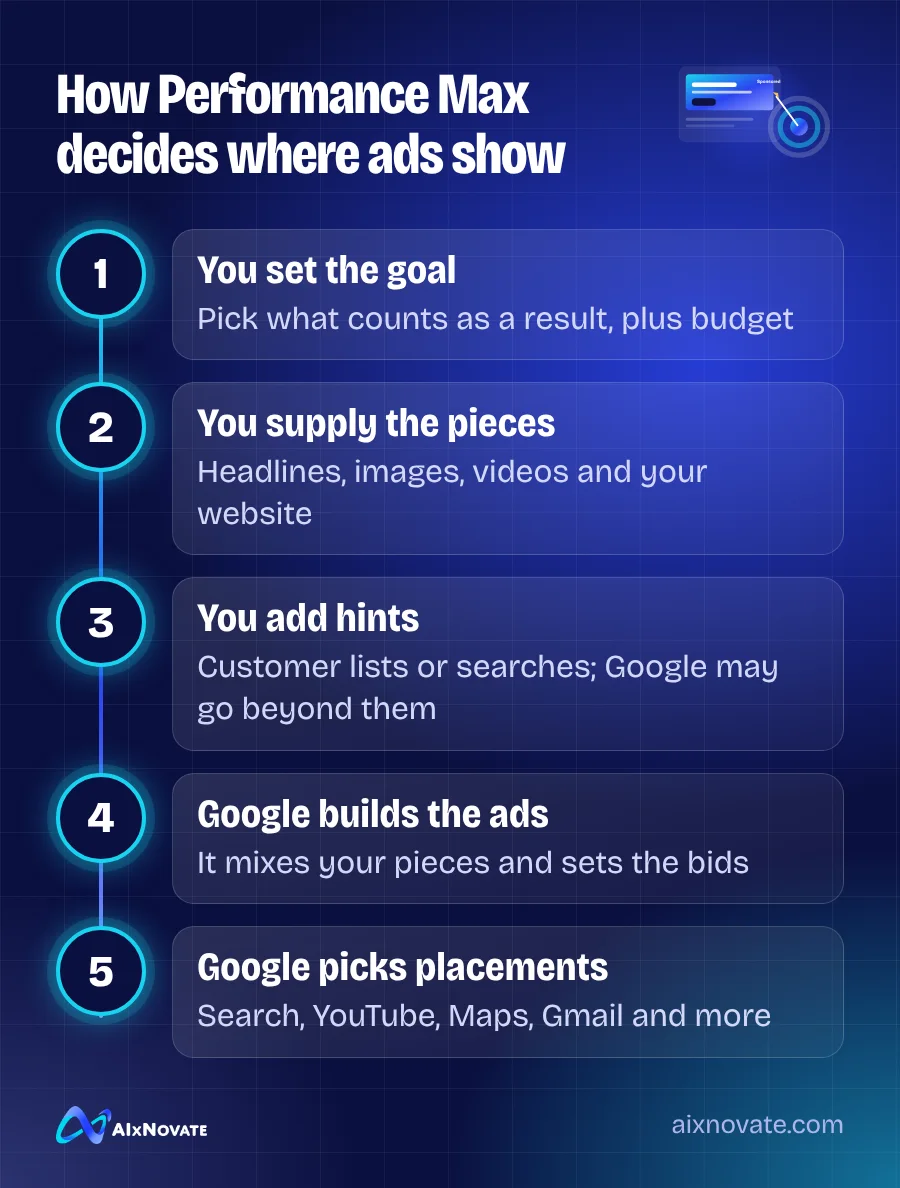
You can add "audience signals", such as your customer lists or the kinds of searches your customers make. These are hints, not strict targeting; the system may go beyond them.
What Meta Advantage+ is
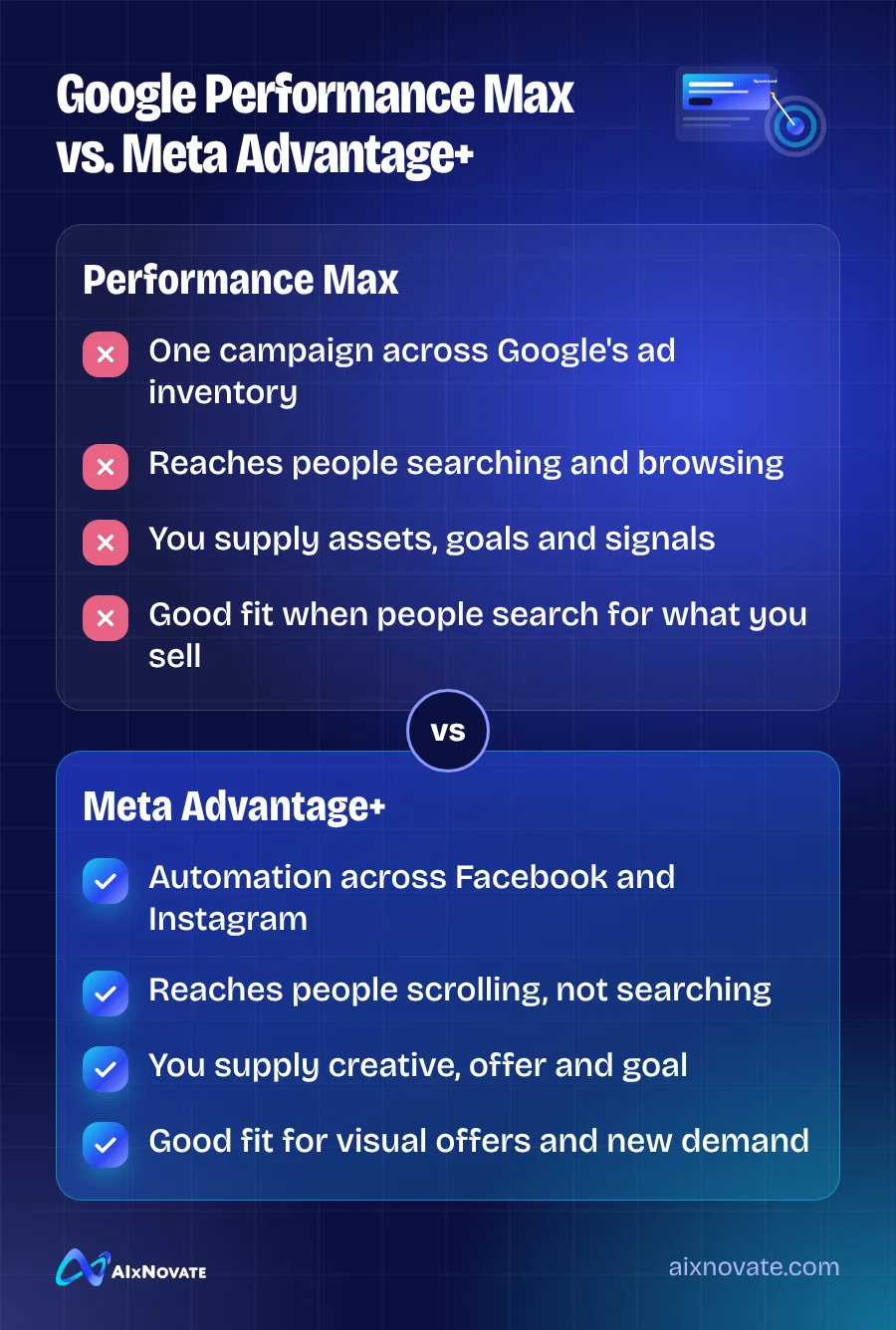
Advantage+ is Meta's name for a family of automation features and campaign setups on Facebook and Instagram. Depending on how you set it up, Meta can automate audience, placements, budget distribution and creative variations such as cropping or text options. Meta has been reorganizing these options over time, so labels in your account may look different from older tutorials. The Meta Business Help Center has the current descriptions.
The big difference from Google is intent. People on Google are often searching for something; people on Instagram are scrolling. Meta automation is usually about creating demand, Google's about capturing it.
What you still control
Handing decisions to AI does not mean handing over the business. You still control the inputs that matter most:
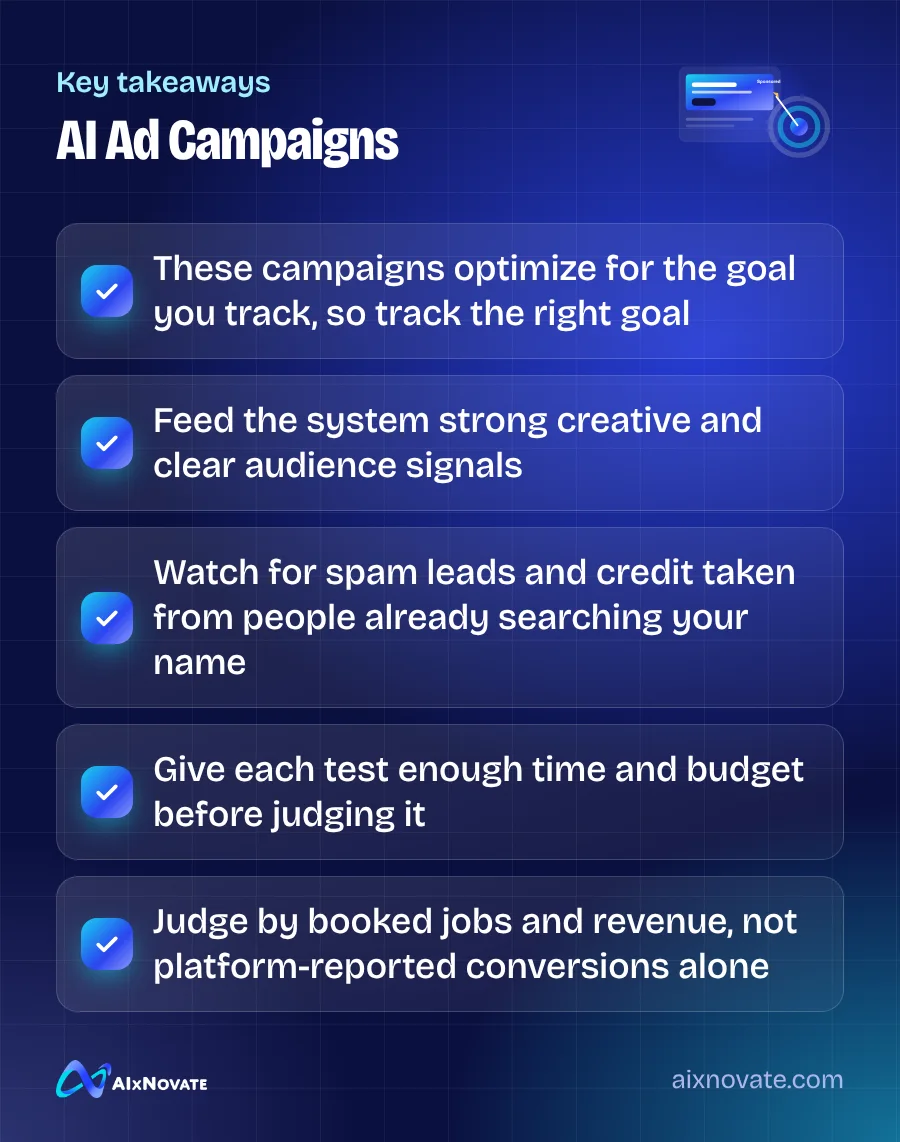
- The goal. The system optimizes toward whatever you tell it counts as a conversion. If a button click counts the same as a booked appointment, it will chase cheap clicks.
- The creative. Images, videos and copy are now the main lever. Weak creative limits even the best algorithm.
- The offer and landing page. No targeting fixes a confusing page or an unclear offer.
- Budget and location. Set realistic budgets and the service area you can actually serve.
- Exclusions and brand settings, where available, to limit where ads appear and how your brand name is used.
Getting tracking and landing pages right is the unglamorous work that decides results, and it is a core part of how our digital marketing team sets up automated campaigns.
The honest downsides
These campaign types are powerful, but they have trade-offs every owner should know about.
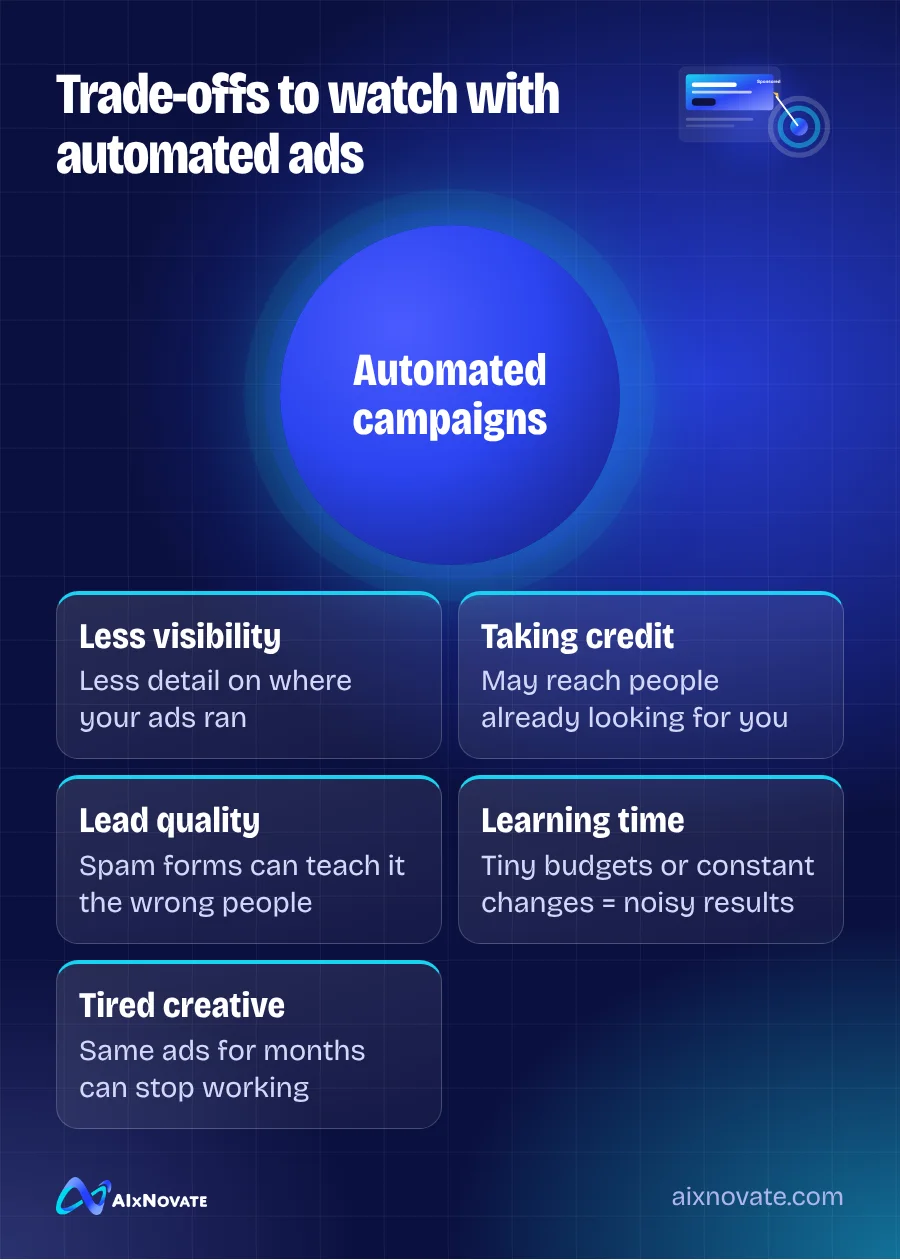
- Less visibility. Reporting on exactly where ads ran and which search terms triggered them is more limited than in traditional campaigns.
- Taking credit. An automated campaign may show ads to people who were already searching your business name and would have found you anyway. Compare results against your organic and direct traffic, and use brand settings where available.
- Lead quality. Form campaigns can attract spam or low-intent submissions. If you only count form fills, the system may learn to find more of the wrong people.
- Learning periods. The system needs data to optimize. Very small budgets or constant changes make results noisy.
- Creative fatigue. Running the same assets for months can reduce performance; plan regular refreshes.
How to set up Performance Max and Advantage+ for a local business
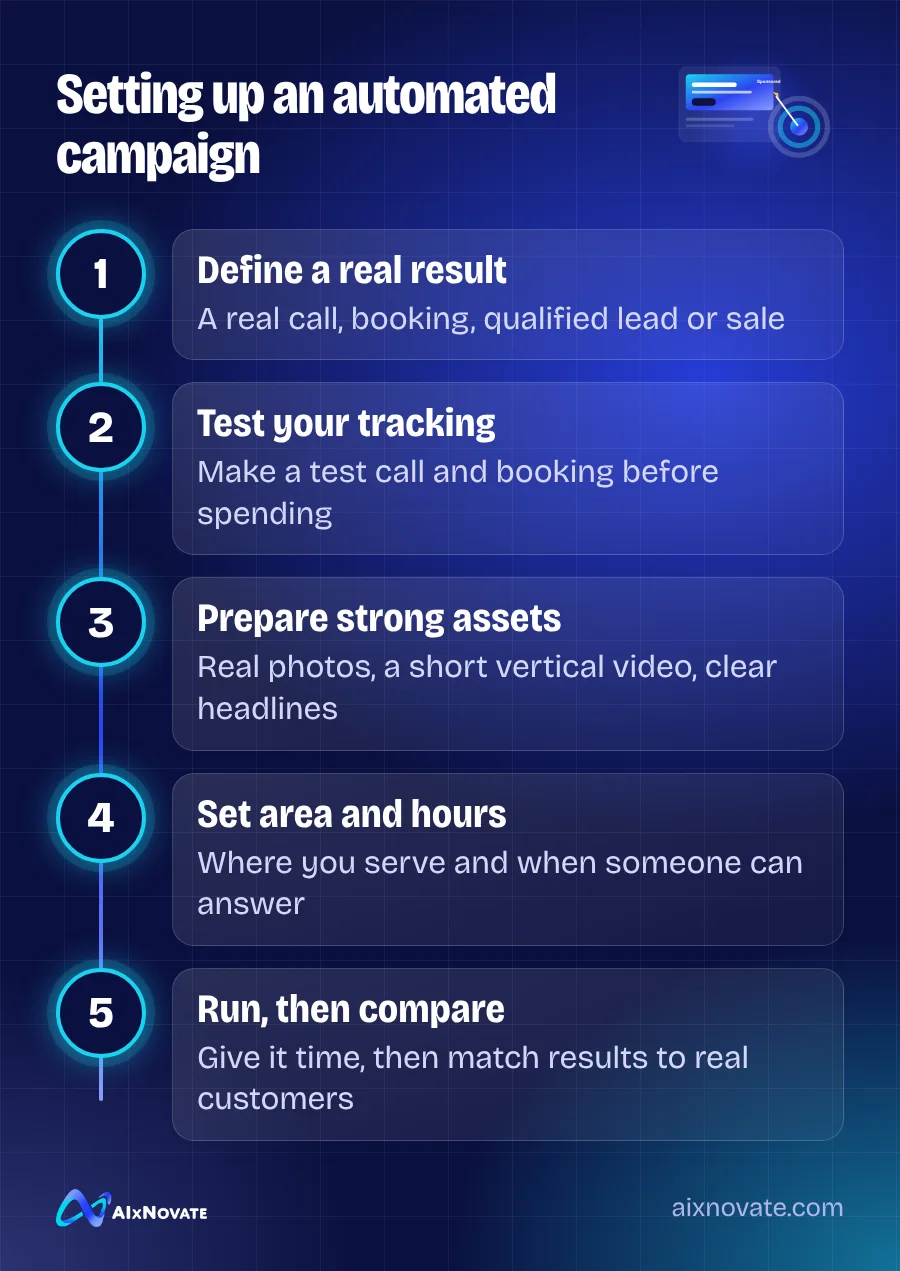
- Define a real conversion. A phone call over a set length, a completed booking, a qualified form submission or a purchase. Avoid counting page views or button clicks as conversions.
- Test your tracking. Make a test call and a test booking and confirm they show up correctly before spending money.
- Prepare strong assets. Several real photos, at least one short vertical video, and headlines that state the service, location and offer plainly.
- Set location and schedule carefully. Target where you serve and, for call-based businesses, when someone can answer.
- Run long enough. Give the campaign enough time and budget to learn before making big changes, then review weekly.
- Close the loop. Compare platform conversions with your booking system or CRM. If the numbers don't match real customers, fix the goal.
Creative quality matters even more when the system assembles ads for you; see AI images and video for ads for what's allowed and what tends to work.
Options for Orange County service businesses
For many Garden Grove and Orange County service businesses, such as plumbers, locksmiths, cleaners and some professional services, Google Local Services Ads can be worth comparing with Performance Max. They appear at the top of some local searches and are typically charged per lead rather than per click; see Google's Local Services Ads overview to check eligibility for your category.
Restaurants, salons, med spas and retailers with visual offers often find Meta's automated campaigns a natural fit, especially when paired with ads in Vietnamese, Spanish or Chinese for the communities they serve. Whatever the mix, start with one platform, get tracking right, and expand only after you see real customers coming in.
If your ads are running but calls are not coming in, start with 7 reasons ads don't make the phone ring and how to fix a website that gets visitors but no leads. For where these tools fit in a broader plan, see AI marketing for small businesses in 2027.
Frequently asked questions
Is Performance Max good for small businesses?
It can be, if you have reliable conversion tracking, a clear offer and enough budget for the system to learn. It tends to struggle when the only conversion is a form fill that attracts spam, or when budgets are too small to gather data. Many small businesses start with a standard Search campaign and add Performance Max once tracking is proven.
Should I trust the conversions reported in Google or Meta?
Treat them as a starting point. Platforms measure conversions using their own attribution models, and different platforms may claim credit for the same customer. Compare platform numbers with your booking system, phone logs or sales records each month. The figure that matters is how many real customers and how much revenue the campaign brought in.
How long should I run an AI ad campaign before judging it?
There is no fixed rule, but avoid judging after a few days. Automated campaigns need time and conversion data to learn, and frequent changes reset that learning. Set a test period with a budget you can afford, review weekly for obvious problems such as spam leads, and make the bigger decision once you have enough real results to compare.
If you'd like a second look at your ad setup, book a free 30-minute consultation, or learn more about our digital and social media advertising services.